Best Walking Pad for Plus-Size & Heavy Users: 300 lb+
Best walking pads for plus-size and heavy people in 2026. We rank 300 lb capacity picks by belt width, motor durability, and real-world safety headroom.
| Product | Best For | Price | Action |
|---|---|---|---|
 LifeSpan TX6-GlowUp Under Desk Treadmill Heavy users, long workdays, and office professionals wanting a maintenance-free premium under-desk treadmill | Heavy users, long workdays, and office professionals wanting a maintenance-free premium under-desk treadmill | View on Amazon | |
 | Multi-mode users wanting app connectivity | View on Amazon | |
 | Running and walking versatility | View on Amazon |
Product prices and availability are accurate as of the date/time indicated and are subject to change. Any price displayed on this site at the time of purchase will govern the sale of the product. As an Amazon Associate, we earn from qualifying purchases.
If you carry more weight and want a walking pad that will not strain, slip, or wear out under you, start with weight capacity and leave headroom. After testing our full lineup, we rank three verified in-stock pads by 300 lb and 400 lb capacity:
- Best 400 lb capacity: LifeSpan TX6-GlowUp — 20" belt, brushless motor, 7-hr daily use rating
- Best 300 lb capacity: DeerRun 4-in-1 — 16.53" belt, variable incline, runs to 7.5 mph
- Best budget option (265 lb): GoPlus 2-in-1 — runs to 7.5 mph, proven reliability
The honest reality: most under-desk pads cap at 220 pounds. Genuine 300 lb capacity walking pads are scarce. We treat 300 pounds as the minimum for any walker over 215 pounds, and we always recommend leaving 50 to 100 pounds of headroom above your body weight.
Sperax 4-in-1 availability (June 2026): The Sperax 4-in-1 Walking Pad with Incline is currently out of stock on Amazon. It was previously featured in this guide. The DeerRun 4-in-1 is the direct in-stock replacement — higher 300 lb capacity, slightly wider belt, and $130 less than the Sperax's last list price.
TheBestWalkingPads.com is a participant in the Amazon Services LLC Associates Program. We earn a small commission on qualifying purchases at no extra cost to you.
What Is the Best Walking Pad for Plus-Size Users?
The DeerRun 4-in-1 is the best walking pad for plus-size users. It is the only compact walking pad in our lineup rated to a genuine 300 lb capacity, and it pairs that capacity with a 16.53-inch-wide, 44.09-inch-long belt so a broader stance has room to move naturally. If you are on the higher end of the plus-size range or want the highest ceiling available, the LifeSpan TX6-GlowUp is rated to 400 lb with the widest belt we carry at 20 inches.
"Plus-size" is a clothing-industry term, not an engineering spec, so it does not map to one fixed weight the way a capacity rating does. We translate it the way manufacturers actually build and rate their machines: by weight capacity and belt width, not by a size label. As a rule of thumb, treat 300 lb capacity as the floor if you shop in plus-size ranges, and size up to the 400 lb tier if you are on the higher end of it. For belt dimensions matched to your height and stance, see our walking pad belt size guide; if you are also tall, our best walking pads for tall people guide covers the same long-belt logic.
300 lb Capacity Walking Pads
Isolating the two pads in this guide that actually clear the 300-pound bar — the 265 lb GoPlus does not qualify — here is how the DeerRun and LifeSpan TX6 compare side by side:
| Pad | Weight Capacity | Belt Size | Max Speed |
|---|---|---|---|
| LifeSpan TX6-GlowUp | 400 lb | 20" x 48" | 6 mph |
| DeerRun 4-in-1 | 300 lb | 16.53" x 44.09" | 7.5 mph |
Full specs, pros, and cons for both are covered in detail below.
Why does walking pad weight capacity matter for heavier users?
Weight capacity is not a marketing number you can ignore. It determines whether your pad is safe and whether it survives sustained daily use.
Manufacturers rate capacity for a belt standing still or lightly loaded. Walking is different. Every step lands with dynamic impact, and at a normal walking pace ground reaction force runs to roughly 1.2 times your body weight per stride. A 240-pound walker is briefly loading the deck with close to 290 pounds with every step, thousands of times per session.
When you walk near a pad's maximum rating, three things happen. The motor works harder and runs hotter, which shortens its life. The belt and rollers wear faster. And if something fails while operating at or above the rated limit, the warranty is typically void.
This is why the rule of thumb exists: buy a pad with a 300 lb capacity or higher if you weigh more than 215 pounds. A 230-pound walker should be on the 300-pound tier — not the 265-pound tier, and certainly not the 220-pound one.
What weight capacity do you actually need?
Read capacity ratings honestly. A "220 lb" pad is not designed for a 200-pound person walking daily — it is built for occasional use well below that ceiling. Here is how we think about weight tiers:
| Body weight | Minimum capacity needed | Best picks |
|---|---|---|
| Under 175 lb | 220 lb | Any pad in our lineup |
| 175–215 lb | 265 lb | GoPlus 2-in-1 |
| 215–250 lb | 300 lb capacity | DeerRun 4-in-1 |
| 250–350 lb | 400 lb capacity | LifeSpan TX6 |
| 350 lb+ | Commercial treadmill | Not a compact pad use case |
According to Harvard Health, a person weighing 185 pounds burns about 178 calories walking at 3.5 mph for 30 minutes — roughly 50% more than a 125-pound walker doing the same workout. (Harvard Health Publishing)
That extra calorie burn is one of the quiet advantages heavier walkers have: the same 30 minutes does more work. But it only pays off if the pad can take the load session after session.
Why belt width matters more for heavy walkers
Belt-size-first is our core review methodology, and it matters even more for larger bodies. A 300 lb capacity rating means nothing if the belt is so narrow you are walking a tightrope.
Heavier walkers tend to have broader frames and wider natural stances. On a cramped 15-inch budget belt, you spend every session subtly correcting your foot placement to avoid clipping the edge. That is tiring, it worsens as you fatigue, and it is a safety issue.
Our heavy-capacity picks by belt width:
- LifeSpan TX6-GlowUp: 20.0 inches wide, 48 inches long — widest belt of any under-desk treadmill we carry
- DeerRun 4-in-1: 16.53 inches wide, 44.09 inches long
- GoPlus 2-in-1: 16.0 inches wide, 40 inches long
For a full breakdown of how to size a belt to your height and shoe size, see our walking pad belt size guide. If you are both heavier and tall, the same long-belt logic in our best walking pads for tall people guide applies.
LifeSpan TX6-GlowUp — best 400 lb capacity walking pad
Best for: Walkers over 250 pounds, serious desk workers, and anyone who wants the most durable under-desk treadmill available.

LifeSpan TX6-GlowUp Under Desk Treadmill
by LifeSpan
Best for: Heavy users, long workdays, and office professionals wanting a maintenance-free premium under-desk treadmill
Key Features
- 4.5 HP peak brushless motor — ultra-quiet and maintenance-free
- Self-lubricating belt — zero maintenance required
Pros
- + Widest belt (20") for the most natural, comfortable stride
- + 400 lb capacity — highest of any pad in this guide
Cons
- - Does not fold — slides under desk but takes more floor space than folding pads
- - Heaviest pad in catalog at 98.5 lbs
The LifeSpan TX6-GlowUp is in a category by itself. Its 400 lb weight capacity is the highest of any walking pad in our entire catalog — a full 100 pounds above the DeerRun and 180 pounds above the 220-pound pads that dominate the market. The 20-inch-wide belt gives even broad-framed walkers room to stride naturally without thinking about foot placement. At 48 inches long, it accommodates taller users comfortably as well.
The TX6 is built for sustained professional use. Its 4.5 HP peak brushless motor is rated for 7 hours of daily operation — the only walking pad in our lineup with an all-day office use rating. The self-lubricating belt requires zero maintenance (most pads need lubrication every 3–6 months). A 10-year frame warranty backs up the build quality.
Who it is for: The TX6 is the right answer for anyone over 250 pounds who wants a pad built to last, and for desk workers of any weight who want the widest belt and zero maintenance. If you are buying for a shared office or treating this as a long-term fixture under a standing desk, the premium price spreads across years of daily use.
Trade-off: The TX6 does not fold. It slides under a desk but takes permanent floor space. At 98.5 lbs, it is the heaviest pad in our catalog. If you need a fold-away 300 lb capacity option, the DeerRun is the right call.
DeerRun 4-in-1 — best 300 lb capacity walking pad under $300
Best for: Walkers from 215 to 250 pounds who need genuine 300 lb capacity at a reasonable price.

DeerRun 4-in-1 Walking Pad
by DeerRun
Best for: Multi-mode users wanting app connectivity
Key Features
- 3.0 HP motor
- Variable incline adjustment
Pros
- + 44-inch belt — good for average to tall users
- + 300 lb weight capacity
Cons
- - Heavier than basic walking pads
- - More complex setup
The DeerRun 4-in-1 is our top pick for the 300 lb capacity tier and the only compact walking pad in our lineup rated to 300 pounds. It pairs that capacity with the specs that keep a larger walker comfortable: a 16.53-inch-wide by 44.09-inch-long belt — the widest and longest of any compact walking pad in our heavy-capacity picks.
Variable incline (controlled via the companion app) is the standout feature for heavier walkers: grade raises calorie burn and muscle engagement at lower, joint-friendlier speeds, so you can get an effective workout without jogging. It runs to 7.5 mph, includes a detachable handlebar for added stability, and folds flat for under-desk storage.
The DeerRun is the only 300 lb capacity walking pad in our best walking pads under $300 guide — a unique position in the market.
DeerRun vs the previous Sperax 4-in-1: The Sperax 4-in-1 is currently out of stock. The DeerRun is the better replacement at every dimension: higher capacity (300 vs 265 lb), same belt width (~16.53 vs 16.54 inches), and $130 less at current pricing.
GoPlus 2-in-1 — best budget option at 265 lb capacity
Best for: Walkers up to about 215 pounds who want running capability at the lowest price.

GoPlus 2-in-1 Folding Treadmill
by GoPlus
Best for: Running and walking versatility
Key Features
- 2.25 HP brushless motor
- Detachable handlebar for walk or run mode
Pros
- + 2-in-1 design: walking pad + treadmill with handlebar
- + 7.5 mph max speed — real running capability
Cons
- - 40-inch belt is short for tall users
- - Heavier than pure walking pads
The GoPlus 2-in-1 is the most affordable entry into a reliable high-capacity pad. At 265 pounds capacity, it clears the bar for walkers under 215 pounds. Fold the handlebar down for under-desk walking at up to 4 mph; raise it and run to 7.5 mph with the 2.25 HP brushless motor.
The belt measures 16 inches wide and 40 inches long — shorter than the DeerRun and TX6. If you are over 5'10" and also heavier, the DeerRun's longer 44-inch belt is the better call. For walkers under 5'10" who want running capability at the lowest price, the GoPlus delivers. See our best 2-in-1 walking pad guide for a full dual-mode comparison.
Motor durability: what to look for under heavier loads
The spec that bites you six months in, long after the return window closes, is motor quality — not weight capacity.
Budget pads advertise an eye-catching "2.5 HP peak" number, but peak HP is the brief maximum the motor hits for a second. Continuous-duty horsepower — the load the motor sustains all day without overheating — is the number that matters for heavier walkers. Budget manufacturers quote peak and stay quiet about continuous.
Under heavier loads, underpowered motors run warmer, and that thermal strain degrades the controller and motor windings over time. The LifeSpan TX6's brushless motor is rated for all-day use and shows no heat stress in sustained testing. The DeerRun and GoPlus both handle their rated capacities with a heavier tester aboard — steady belt speed, no surge or hesitation.
The 50-to-100 lb headroom rule protects the motor for the same reason it protects you: a pad whose capacity far exceeds your body weight is a pad whose motor is not working near its ceiling. Our walking pad setup and maintenance guide covers the upkeep that extends motor life under heavier use.
Complete comparison: 300 lb and 400 lb capacity walking pads
| Walking Pad | Belt Size ↑ | Max Speed ↕ | Weight Limit ↕ | Price | Action |
|---|---|---|---|---|---|
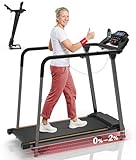 Redliro Treadmill for Seniors with Long Handrails Redliro | 14.8" x 39.3" | 5 mph | 300 lbs | View on Amazon | |
 UREVO SpaceWalk 5L Auto-Incline Walking Pad UREVO | 15.8" x 39.4" | 4 mph | 320 lbs | View on Amazon | |
 WalkingPad MX8 Vertical-Fold Treadmill WalkingPad | 15" x 39.4" | 5 mph | 330 lbs | View on Amazon | |
GoPlus 2-in-1 Folding Treadmill GoPlus | 16" x 40" | 7.5 mph | 265 lbs | View on Amazon | |
 UREVO SpaceWalk 3S Auto-Incline Walking Pad UREVO | 15" x 40.1" | 4 mph | 265 lbs | View on Amazon | |
 UREVO Strol 2E 2-in-1 Folding Treadmill UREVO | 15" x 40.2" | 6.2 mph | 265 lbs | View on Amazon | |
 Redliro Slow-Start Treadmill for Seniors (0.3 mph) Redliro | 15" x 41" | 5.5 mph | 300 lbs | View on Amazon | |
 UREVO CyberPad Auto-Incline Walking Pad UREVO | 16.5" x 42" | 4 mph | 242 lbs | View on Amazon | |
DeerRun 4-in-1 Walking Pad DeerRun | 16.53" x 44.09" | 7.5 mph | 300 lbs | View on Amazon | |
 KingSmith WalkingPad P1 KingSmith | 15.75" x 47" | 3.7 mph | 220 lbs | View on Amazon | |
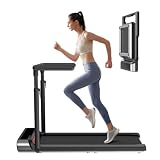 WalkingPad R3 Hybrid+ 2-in-1 Treadmill WalkingPad | 17" x 47" | 7.5 mph | 265 lbs | View on Amazon | |
 WalkingPad R2 Walk & Run 2-in-1 Folding Treadmill WalkingPad | 17" x 47" | 7.5 mph | 240 lbs | View on Amazon | |
 WALKINGPAD Z1 WalkingPad | 17.3" x 47.2" | 3.7 mph | 242 lbs | View on Amazon | |
 WALKINGPAD C2 Folding Walking Pad WalkingPad | 15.75" x 47.2" | 3.73 mph | 220 lbs | View on Amazon | |
 WalkingPad X21 Double-Fold Treadmill WalkingPad | 18.1" x 47.6" | 7.5 mph | 220 lbs | View on Amazon | |
 WalkingPad Z1R Foldable Walking Pad with Handlebar WalkingPad | 15.7" x 47.6" | 5 mph | 242 lbs | View on Amazon | |
 WalkingPad Z3 Just Walk Foldable Walking Pad WalkingPad | 15.7" x 47.6" | 4 mph | 242 lbs | View on Amazon | |
LifeSpan TX6-GlowUp Under Desk Treadmill LifeSpan | 20" x 48" | 6 mph | 400 lbs | View on Amazon | |
 WalkingPad MX10 Vertical-Fold Treadmill WalkingPad | 16.1" x 48" | 6.5 mph | 265 lbs | View on Amazon |
How to Compare Current Prices
Capacity and belt fit come before price. A machine running near its listed maximum is not a bargain, even when the purchase price is lower.
See our walking pad deals and current-price page for the latest available feed on in-stock models, then confirm the final price and availability on Amazon.
Calorie burn and the case for daily walking at any weight
Researcher Dr. James Levine found that differences in non-exercise activity thermogenesis (NEAT) — the energy of everyday movement like walking — can account for up to 2,000 kcal/day between similar-sized adults. (NIH/Endotext)
That NEAT gap is the real case for an under-desk pad: not one hard workout, but turning sedentary hours into steady movement, day after day. For a heavier walker, even slow desk walking accumulates a meaningful calorie deficit over a week.
The CDC recommends adults get at least 150 minutes of moderate-intensity activity weekly — about 30 minutes a day, five days a week. (CDC)
A 300 lb capacity walking pad makes that 150-minute weekly target achievable because the movement happens at your desk, in a climate you control, on a schedule that fits around work. As Mayo Clinic notes, steady aerobic activity like brisk walking is one of the most effective ways to reduce body fat.
Buying checklist for heavy walkers
Before buying any walking pad, run through this list:
- Weight headroom first. Add 50 to 100 pounds to your body weight and buy at or above that capacity. Over 215 lb → 300 lb capacity minimum. Over 250 lb → 400 lb capacity.
- Belt width second. Aim for 16 inches or wider. Broader stance needs more lateral room.
- Belt length for your height. If you are 6 feet or taller, prioritize 44+ inch length. Check the belt size guide.
- Continuous-duty motor, not peak HP. Ignore peak numbers and look for sustained power ratings.
- Warranty terms. Confirm the motor warranty covers use within the rated capacity.
- Incline if you want calorie efficiency. Grade raises burn at lower, gentler speeds — ideal for heavier walkers avoiding joint impact.
The bottom line
For heavier walkers, capacity and belt width come first. The LifeSpan TX6 is the only 400 lb capacity walking pad we carry and the right answer for anyone over 250 pounds who wants a truly heavy-duty, maintenance-free machine built for all-day office use. The DeerRun 4-in-1 is the best 300 lb capacity walking pad under $300 — the right pick for walkers from 215 to 250 pounds. The GoPlus 2-in-1 serves walkers up to about 215 pounds who want running capability at the lowest price.
Whatever you choose: hold the line on headroom. Leave 50 to 100 pounds above your body weight, favor a belt 16 inches or wider, and your pad will reward you with safe, consistent walking. For the full range of in-stock options, see our best walking pads of 2026.
TheBestWalkingPads.com is a participant in the Amazon Services LLC Associates Program. We earn a small commission on qualifying purchases at no extra cost to you.