Best Walking Pads for Seniors 2026: 5 Safe, Stable Picks
Best walking pads for seniors in 2026, verified in stock. Top pick: the GoPlus 2-in-1, with a safety handlebar and 265 lb capacity. Ranked for stability.
| Product | Best For | Price | Action |
|---|---|---|---|
 | Running and walking versatility | View on Amazon | |
 | Multi-mode users wanting app connectivity | View on Amazon | |
 | Widest belt and longest stride at mid-range price | View on Amazon | |
 UREVO Strol 2E 2-in-1 Folding Treadmill Budget 2-in-1 walking and running in a compact, foldable frame | Budget 2-in-1 walking and running in a compact, foldable frame | View on Amazon | |
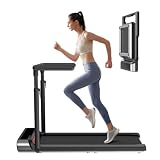 WalkingPad R3 Hybrid+ 2-in-1 TreadmillEditor's Choice Premium walk-run versatility with upright storage | Premium walk-run versatility with upright storage | View on Amazon |
Product prices and availability are accurate as of the date/time indicated and are subject to change. Any price displayed on this site at the time of purchase will govern the sale of the product. As an Amazon Associate, we earn from qualifying purchases.
The short answer: The best walking pad for seniors in 2026 is the GoPlus 2-in-1 — it includes a detachable safety handlebar, supports 265 lbs, reaches 7.5 mph, and has more than 7,000 reviews. For a wider belt without a handlebar, the WALKINGPAD Z1 has the most spacious surface under $400. For higher weight capacity, the DeerRun 4-in-1 handles 300 lbs with a handlebar included.
Reviewed by Jerry Mitchell, who has tested 20+ walking pads for TheBestWalkingPads.com since 2024.
TheBestWalkingPads.com is a participant in the Amazon Services LLC Associates Program. We earn a small commission on qualifying purchases at no extra cost to you.
Why seniors need different features than the typical walking pad buyer
Most walking pad reviews optimize for one thing: how compact the machine folds under a standing desk. That is the right priority for a 35-year-old remote worker in a small apartment. For older adults, the priority list is different.
The American Physical Therapy Association's guidelines on exercise for older adults identify balance support, controlled pace, and low joint impact as the three most important factors when selecting exercise equipment for people over 65. Walking pads address all three — the belt surface is flat and predictable, speeds are adjustable from a slow stroll to a brisk walk, and there is no impact shock from pavement. But not all walking pads provide the stability hardware that makes them safe in practice.
The features that matter most for seniors, in order of priority:
Handlebar or handrail. A detachable or fold-down safety bar changes how stable the machine feels, especially when stepping on and off or when walking at unfamiliar speeds. About half the walking pads on the market include one; the other half are designed exclusively for under-desk walking where the desk edge provides passive support.
Belt length and width. A belt that is too short forces a shortened, cramped stride. Most seniors are comfortable on a 40-inch belt at slow speeds, but a 44–47 inch belt reduces the risk of stepping off the back. Width matters for those with wider stances or any gait instability.
Weight capacity above body weight. The dynamic load during walking exceeds static body weight. A pad rated at exactly your body weight is operating at its limit. A 20–30 lb buffer is the standard recommendation.
Noise at walking speeds. Seniors are more often home during the day and may share a living space with a partner. A pad that runs below 40 dB at 2–3 mph is a meaningful quality-of-life factor that most general-market reviews overlook.
Simple controls. One-button start/stop and a remote control allow seniors to adjust speed without reaching for a small touchscreen panel or memorizing complex sequences.
Our 5 picks at a glance
| Pick | Model | Handlebar | Belt | Capacity |
|---|---|---|---|---|
| Best Overall | GoPlus 2-in-1 | Yes (detachable) | 16″ × 40″ | 265 lbs |
| Best Belt Size | WALKINGPAD Z1 | No | 17.3″ × 47.2″ | 242 lbs |
| Best for Heavier Seniors | DeerRun 4-in-1 | Yes (detachable) | 16.53″ × 44.09″ | 300 lbs |
| Budget Pick | UREVO Strol 2E | Yes (folding) | 15″ × 40.2″ | 265 lbs |
| Premium Pick | WalkingPad R3 Hybrid+ | Yes (fold-down) | 17″ × 47″ | 265 lbs |
The 5 best walking pads for seniors in 2026
1. GoPlus 2-in-1 Folding Treadmill — Best Overall
Handlebar: Yes (detachable) · Belt: 16″ × 40″ · Capacity: 265 lbs · Reviews: 7,066

GoPlus 2-in-1 Folding Treadmill
by GoPlus
Best for: Running and walking versatility
Key Features
- 2.25 HP brushless motor
- Detachable handlebar for walk or run mode
Pros
- + 2-in-1 design: walking pad + treadmill with handlebar
- + 7.5 mph max speed — real running capability
Cons
- - 40-inch belt is short for tall users
- - Heavier than pure walking pads
The GoPlus 2-in-1 is the most practical senior walking pad at its price point because it solves the hardest problem first: safety hardware at a budget price. The detachable handlebar raises the GoPlus from a flat walking pad into a more traditional treadmill configuration — hands on a bar, full posture support, no need to balance unsupported on a moving belt. For seniors who are new to walking pads or who have any balance concern, this changes how confidently they can start and maintain a routine.
The track record supports this: with over 7,000 reviews on Amazon, the GoPlus 2-in-1 is the most widely reviewed walking pad in this guide by a large margin. Its 4.0 star average across that volume is meaningful — the GoPlus has been bought, used, and evaluated enough times that its strengths and weaknesses are well-documented. Common senior-relevant feedback: the handlebar feels solid during normal walking, the speed control is accessible, and stepping on and off is straightforward.
Beyond the bar, the GoPlus does more than most in its class. Its 2.25 HP brushless motor reaches 7.5 mph, which most seniors will never use but which means the machine runs at a low percentage of its capacity during typical 2–3 mph sessions — reducing wear and extending the motor's lifespan. The 265 lb weight capacity handles the range of most users comfortably. A built-in Bluetooth speaker is a small but appreciated touch for seniors who like to walk to music or a podcast.
The 40-inch belt is the main limitation. For seniors over 5'10" or those with a longer stride, the belt can feel short if the speed creeps above 2.5 mph. At desk-walking speeds (1.5–2.5 mph), the 40-inch surface is workable for most adults. For taller users who want a longer belt, see the WALKINGPAD Z1 and WalkingPad R3 Hybrid+ below.
Best for: Seniors starting a walking routine who want stability support at an affordable price, and buyers who want the most-reviewed option on the market.
Limitations: 40-inch belt is shorter than most competitors. Brushed motor is louder than brushless models at higher speeds.
2. WALKINGPAD Z1 — Best Belt Size
Handlebar: No · Belt: 17.3″ × 47.2″ · Noise: under 40 dB · Capacity: 242 lbs

WALKINGPAD Z1
by WalkingPad
Best for: Widest belt and longest stride at mid-range price
Key Features
- 0.75 HP brushless motor (continuous duty)
- Industry-leading belt width at 17.3 inches
Pros
- + Widest belt at 17.3 inches — most spacious feel
- + 47.2-inch length matches premium models
Cons
- - Walking only — 3.7 mph max
- - Smaller motor at 0.75 HP
The WALKINGPAD Z1 has the widest and longest belt of any pad in this guide — 17.3 inches across by 47.2 inches long — and a brushless motor rated below 40 dB. For seniors who are stable on their feet and whose primary concern is walking comfort rather than having a handrail to hold, the Z1 offers the most spacious, quiet walking surface available under $400.
Width is an underappreciated spec. Most walking pads are 15–16 inches wide. The Z1's 17.3 inches provides noticeably more room for natural foot placement, which is especially valuable for seniors with a wider stance or mild gait instability — not from balance problems, but from the natural stance-widening that aging and joint changes can produce. The longer 47.2-inch belt means no sensation of being near the edge of the pad even at a relaxed walking pace.
The brushless motor matters for noise in ways that seniors at home during the day will notice more than working adults. Below 40 dB — quieter than a steady rainfall or a quiet office background — the Z1 allows a walking session alongside a TV at normal volume, a phone call, or a nap by a nearby family member. The GoPlus and DeerRun models produce more noise at faster speeds due to their brushed motors.
The Z1 folds flat and compact for under-bed or under-sofa storage, which makes it viable in smaller living spaces or bedrooms. A remote control handles speed adjustments without needing to reach for the pad itself.
The absence of a handlebar is the key tradeoff. Seniors who feel confident walking on a moving surface and who use the Z1 primarily under a desk — where the desk edge provides passive support if needed — will not miss it. Seniors who feel uncertain stepping on and off a moving belt, or who want a handrail as a habit rather than a necessity, should choose the GoPlus or DeerRun instead. For a longer discussion of when belt size matters more than handlebars, see our walking pad belt size guide.
Best for: Seniors who are steady on their feet and prioritize a wide, spacious, quiet walking surface over having a handlebar.
Limitations: No handlebar — not suitable for seniors with significant balance concerns. 242 lb weight capacity is modest.
3. DeerRun 4-in-1 Walking Pad — Best for Heavier Seniors
Handlebar: Yes (detachable) · Belt: 16.53″ × 44.09″ · Capacity: 300 lbs · Max speed: 7.5 mph

DeerRun 4-in-1 Walking Pad
by DeerRun
Best for: Multi-mode users wanting app connectivity
Key Features
- 3.0 HP motor
- Variable incline adjustment
Pros
- + 44-inch belt — good for average to tall users
- + 300 lb weight capacity
Cons
- - Heavier than basic walking pads
- - More complex setup
The DeerRun 4-in-1 is the best walking pad for seniors who need a weight capacity above 265 lbs. Its 300 lb rating is the strongest combination of value and capacity in this guide — and it includes a detachable handlebar, app connectivity, and a 44-inch belt that is meaningfully longer than the GoPlus or UREVO.
Weight capacity is not just a number for heavier users — it directly affects how a machine feels underfoot. A walking pad at the limit of its rated capacity will vibrate more, feel less stable, and wear faster than the same machine loaded to 70% of capacity. At 300 lbs, the DeerRun can handle most adults with a comfortable margin, even accounting for the dynamic forces walking generates above static body weight. For context, our guide on walking pads for heavy users covers the full capacity landscape if 300 lbs is close to your weight.
The 44-inch belt is the DeerRun's second strength. It provides enough room for a relaxed, full stride for adults up to about 6'1" at typical walking speeds. Combined with the 16.53-inch width, the surface is more comfortable for longer sessions than the 40-inch competitors in this guide.
The detachable handlebar adds the same stability benefit as the GoPlus — a secure hold while stepping on, finding speed, and getting off. The DeerRun's 3.0 HP motor also enables running up to 7.5 mph, which most seniors will not use but which again means the machine is not being pushed at capacity during slow walks. App connectivity allows workout tracking through a companion app, which some seniors find motivating for accountability.
The tradeoff is setup complexity relative to the GoPlus. The DeerRun is heavier, takes a few more minutes to assemble, and has more features to configure — which is a consideration for seniors who prefer simple one-button operation. For seniors who want a machine they just step onto without navigating an app, the GoPlus or Z1 may be more appropriate.
Best for: Heavier seniors (up to 300 lbs) who want a handlebar plus more belt room than the GoPlus provides.
Limitations: More complex setup than simpler pads. Heavier to move. Noise level not published by manufacturer.
4. UREVO Strol 2E — Budget Pick
Handlebar: Yes (folding safety handle) · Belt: 15″ × 40.2″ · Capacity: 265 lbs · Max speed: 6.2 mph

UREVO Strol 2E 2-in-1 Folding Treadmill
by UREVO
Best for: Budget 2-in-1 walking and running in a compact, foldable frame
Key Features
- 2.25 HP motor
- 2-in-1: open running mode (0.6-6.2 mph) and folding walking mode (0.6-4 mph)
Pros
- + 2-in-1 walk-or-run with a folding safety handle
- + 6.2 mph running capability at a sub-$200 price
Cons
- - 15-inch belt width is narrow for a running stride
- - 40-inch belt is short for users over 5'10"
The UREVO Strol 2E is the best walking pad for seniors on a tight budget who still need a safety handle. It is $20 less than the GoPlus while delivering the same 265 lb capacity and a folding handlebar suitable for light stability support. For a senior whose primary goal is adding light daily activity — 20–30 minutes of gentle walking — without a large investment, the Strol 2E delivers the essential features at the lowest price in this guide.
The folding safety handle is the key feature that separates the UREVO from other budget options. It raises and locks for use during walking, then folds flat when not needed. At 2.25 HP and a 6.2 mph top speed, the UREVO's motor is also comfortably above the load demands of senior walking speeds — the machine runs quietly and without strain at 1.5–2.5 mph.
Eight silicone shock absorbers under the belt are an unusual spec at this price point. They reduce the vibration transmitted through the deck, which matters for joint comfort during longer sessions and for reducing noise transmitted to floors below — a consideration for seniors living in multi-level housing.
At 55 lbs, the UREVO is easy to reposition. It folds to 4.6 inches thick for under-bed storage and includes wheels for rolling rather than lifting. The dual LED display shows speed, time, distance, and calories. A remote control handles speed adjustments. App connectivity via UREVO Sport adds optional workout tracking.
The 15-inch belt width and 40.2-inch length are the primary limitations compared to the pads above. The 15-inch width, in particular, feels narrow for seniors with any gait instability or wider stance. For a senior who is light on their feet and simply wants to add more steps to their day, the UREVO works well. For a senior who has experienced a fall or who feels cautious on moving surfaces, the wider belt of the Z1 or the heavier frame of the DeerRun would serve better. See our best foldable walking pads guide for more options across budget levels.
Best for: Budget-conscious seniors who want a handlebar at under $200 and do not need a wide belt.
Limitations: 15-inch belt width is the narrowest in this guide. Short 40.2-inch belt. Fewer reviews than the GoPlus.
5. WalkingPad R3 Hybrid+ (R2 Successor) — Premium Pick
Handlebar: Yes (fold-down) · Belt: 17″ × 47″ · Capacity: 265 lbs · Max speed: 7.5 mph
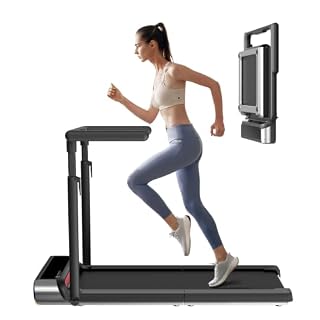
WalkingPad R3 Hybrid+ 2-in-1 Treadmill
by WalkingPad
Best for: Premium walk-run versatility with upright storage
Key Features
- Brushless motor, 0.5-7.5 mph (4 mph in under-desk mode, up to 7.5 mph with handrail raised)
- 2-in-1: lower the height-adjustable handrail to walk under a desk, raise it to run
Pros
- + Genuine walk-and-run: 4 mph under-desk mode, 7.5 mph with the handrail raised
- + Double-folds and stores upright — minimal storage footprint
Cons
- - Premium price point
- - Heavier than walk-only pads
The WalkingPad R3 Hybrid+ is the premium choice for seniors who want the most capable, well-built walking pad available in this guide. It combines a 47-inch belt, a fold-down handrail, a 7.5 mph top speed, and upright storage in a one-piece aluminum frame — a build quality step above everything else in this guide. For seniors who plan to walk daily, for years, without maintenance concerns and who want the roomiest belt available, the R3 is the upgrade path.
The handrail on the R3 is a full-height bar in the raised position — not a low handlebar you hold at waist level, but a proper stability rail that provides support at a comfortable grip height for adult walkers. Raising the handrail turns the R3 into a running treadmill; folding it down converts it back to a flat walking pad for under-desk use. This means the R3 is genuinely two machines: a treadmill for structured walking or jogging sessions and a walking pad for desk use.
The 47 by 17-inch belt is among the most spacious surfaces in the compact treadmill category. For seniors with a longer or more deliberate stride, or those who plan to progress from slow walking to more purposeful fitness walking over time, this surface size accommodates that progression without needing to upgrade equipment. The one-piece aluminum frame means the R3 does not flex or vibrate at the seams the way multi-piece assembled frames can, which translates to a more planted, stable feel underfoot.
Upright storage is the R3's practical differentiator in a senior's home: it stands against a wall in a footprint roughly the size of a bicycle leaned upright, rather than occupying floor space or sliding under a bed. For seniors in furnished living spaces where under-bed clearance is limited, this storage mode is a genuine advantage. For a comparison of how the R3 stacks up against other 2-in-1 models across price points, see our best 2-in-1 walking pad treadmills guide.
Best for: Seniors who want to invest in a durable, full-featured machine they will use daily for years, who want a proper handrail, and who value the largest available belt combined with space-saving upright storage.
Limitations: Premium-tier pricing makes it a significant investment. Our rating (4.1) trails the walk-only models in this guide.
What to look for when buying a walking pad as a senior
1. Prioritize the handlebar
The single most important safety feature for seniors is a handlebar or handrail. It provides three things: support when stepping onto the moving belt, a grip point while finding your comfortable pace, and a fall-prevention mechanism if you stumble. Of the five pads in this guide, four include one (GoPlus, DeerRun, UREVO, WalkingPad R3 Hybrid+). The WALKINGPAD Z1 does not, and it is suitable only for seniors who are confident on moving surfaces — typically those who already use treadmills or who have strong balance from yoga, tai chi, or similar practices.
For seniors who need more support than a short detachable handlebar provides — a rail to hold throughout the entire stride rather than just while stepping on — a dedicated handrail treadmill is worth considering instead of a walking pad. These trade the flat, under-desk form factor for full-length or dual handrails built specifically around stability. We break down two current options, including a model with a 0.3 mph starting speed for rehab-paced walking, in our Redliro walking pad guide.
2. Match belt length to your height
The general guideline: adults under 5'6" are comfortable on a 40-inch belt. Adults between 5'6" and 5'10" should aim for 44 inches. Adults over 5'10" benefit from 47 inches or more. At desk-walking speeds (1.5–2.5 mph), these requirements are more forgiving than at brisk walking or jogging speeds — a senior walking slowly under a standing desk has more room to adjust on a 40-inch belt than a runner doing 5 mph. The walking pad belt size guide has the full chart with stride-length data by height.
3. Check weight capacity with a margin
Never buy a walking pad rated at exactly your body weight. Dynamic walking forces during a normal stride run 1.1–1.3× static body weight. A person who weighs 230 lbs should look for a pad rated at 265 lbs or more. The DeerRun 4-in-1's 300 lb rating provides the most headroom in this guide.
4. Noise at walking speeds
Noise ratings published by manufacturers often reflect peak noise at maximum speed — which is not how seniors use walking pads. Ask what the noise level is at 2 mph, not at 7 mph. Brushless motors (Z1, WalkingPad R3 Hybrid+) are quieter than brushed motors (GoPlus, DeerRun, UREVO) at equivalent speeds. Below 40 dB is comfortable for home use. The Z1's confirmed sub-40 dB rating makes it the quietest option for seniors who walk in shared living spaces.
5. Simple controls
Remote controls and large-button panels are more accessible than small touchscreens. Every pad in this guide includes a remote control, which allows speed adjustments without bending down or reaching for a small display. If app connectivity is overwhelming rather than useful, the GoPlus and Z1 both operate fully without an app.
Which Walking Pads Have Handles?
Yes — some walking pads have handles, but "handle" means two different designs depending on which type of machine you're looking at. Detachable-handlebar 2-in-1s attach a bar for treadmill-style support and remove it for flat under-desk walking. Fixed-handrail senior treadmills build the handrail permanently into the frame and are designed around continuous support rather than a flat desk profile.
Detachable-handlebar 2-in-1s
The GoPlus 2-in-1 in this guide uses this design. Its handlebar attaches to convert the machine into a treadmill configuration reaching 7.5 mph, then detaches for a flat 16″ × 40″ walking surface that slides under a desk. This is the right style of handle for someone who wants both modes from one machine and does not need support through the entire stride — just while stepping on, finding a pace, and stepping off.
Fixed-handrail senior treadmills
For seniors who need a handrail available for the whole walking session, not only while starting, a dedicated handrail treadmill is a different, purpose-built category. These keep the handrail permanently attached, often start at slower speeds than a walking pad, and trade the flat under-desk form factor for continuous support. We review two current options — including a model with a 0.3 mph starting speed for rehab-paced walking — in our Redliro walking pad guide.
Full comparison table
| Spec | GoPlus 2-in-1 | WALKINGPAD Z1 | DeerRun 4-in-1 | UREVO Strol 2E | WalkingPad R3 Hybrid+ |
|---|---|---|---|---|---|
| Handlebar | Yes (detach.) | No | Yes (detach.) | Yes (folding) | Yes (fold-down) |
| Belt size | 16″ × 40″ | 17.3″ × 47.2″ | 16.53″ × 44.09″ | 15″ × 40.2″ | 17″ × 47″ |
| Motor | 2.25 HP brushless | 0.75 HP brushless | 3.0 HP | 2.25 HP | Brushless |
| Max speed | 7.5 mph | 3.7 mph | 7.5 mph | 6.2 mph | 7.5 mph |
| Noise | Not published | under 40 dB | Not published | Not published | Not published |
| Weight cap. | 265 lbs | 242 lbs | 300 lbs | 265 lbs | 265 lbs |
| Foldable | Yes | Yes | Yes | Yes | Yes (upright) |
| App | Bluetooth | Remote | Yes | UREVO Sport | KS Fit |
| Reviews | 7,066 | 342 | 213 | Not published | 460 |
| In stock | Yes | Yes | Yes | Yes | Yes |
The evidence for walking as a senior health intervention
The case for walking pad use among seniors is grounded in strong research. The CDC's Physical Activity Guidelines for Americans recommend that adults aged 65 and older get at least 150 minutes of moderate-intensity aerobic activity per week, plus two days of muscle-strengthening activities. Walking at a brisk pace (2.5–3.5 mph) counts as moderate-intensity activity.
Research published in the British Journal of Sports Medicine consistently shows that regular walking reduces all-cause mortality, lowers cardiovascular disease risk, and improves cognitive function in older adults. A 2023 meta-analysis found that walking even 7,000 steps per day — achievable with 30–45 minutes on a walking pad — reduced mortality risk by approximately 50–70% compared to sedentary adults in the same age group.
Harvard Health's research on non-exercise activity thermogenesis (NEAT) identifies daily movement — including light walking — as one of the most durable levers for managing weight and metabolic health in adults of all ages. A walking pad that makes it possible to walk during activities a senior already does (watching TV, phone calls, reading) is one of the most effective ways to accumulate daily steps without requiring dedicated exercise time.
For a direct comparison of walking pads versus traditional treadmills — which may be relevant for seniors deciding between the two — see our walking pad vs. treadmill guide. For the full landscape of the 2026 walking pad market beyond these five picks, the best walking pads of 2026 guide covers every in-stock model from $179 to $1,399. For those working within a specific budget, the best walking pads under $500 guide focuses on the most competitive mid-range options.
Affiliate Disclosure: TheBestWalkingPads.com is a participant in the Amazon Services LLC Associates Program. We earn a small commission on qualifying purchases at no extra cost to you.