Japanese Walking Method on a Walking Pad: 2026 Guide
Learn the Japanese walking method (interval walking training) on a walking pad, plus 2026 updates: protocol, speed settings, and best walking pads for IWT.
| Product | Best For | Price | Action |
|---|---|---|---|
 | Widest belt and longest stride at mid-range price | View on Amazon | |
 | Running and walking versatility | View on Amazon |
Product prices and availability are accurate as of the date/time indicated and are subject to change. Any price displayed on this site at the time of purchase will govern the sale of the product. As an Amazon Associate, we earn from qualifying purchases.
Japanese walking is the biggest fitness trend of 2026, with search interest up nearly 3,000% according to PureGym's annual fitness report. A walking pad is the ideal tool for this method because you get precise speed control through a remote, making the 3-minute intervals exact and consistent with zero guesswork. This guide covers the complete Japanese walking protocol adapted for walking pads, the science behind why it works, and which walking pads handle interval transitions best.
"Japanese walking (interval walking training) alternates 3 minutes of fast walking with 3 minutes of slow walking for about 30 minutes. Research from Shinshu University shows it outperforms steady-pace walking for cardiovascular fitness, leg strength, and blood pressure."
The method has been featured in TIME, TODAY, and across TikTok. But the real story is the 20-plus years of peer-reviewed research backing it up from Shinshu University in Japan.
What Is the Japanese Walking Method?
Japanese walking, also called Interval Walking Training (IWT), was developed by researchers at Shinshu University in Japan, led by Professor Hiroshi Nose and Associate Professor Shizue Masuki. The method is backed by over 20 years of clinical research and thousands of study participants.
The concept is simple: instead of walking at one steady pace, you alternate between fast and slow intervals.
The Basic Japanese Walking Protocol
- Warm up — 5 minutes of easy walking
- Fast interval — 3 minutes of brisk walking (effort level 6-7 out of 10)
- Slow interval — 3 minutes of comfortable walking (effort level 3-4 out of 10)
- Repeat — Do 4-5 fast/slow cycles
- Cool down — 3-5 minutes of easy walking
Total workout time: About 30 minutes, 3-4 times per week.
That is it. No running, no gym equipment beyond a walking pad for indoor sessions, no complicated routines.
Japanese Walking Method: 2026 Updates
Japanese walking has moved from viral trend to mainstream fitness staple this year. The interval format now shows up in gym class schedules, fitness app training plans, and wearable coaching prompts, alongside continued coverage from major health and lifestyle outlets. Here is what has changed in 2026.
Mainstream Adoption Wave
What began as a social media trend has settled into a widely recommended low-impact workout. Personal trainers, physical therapists, and corporate wellness programs increasingly list Japanese walking (interval walking training, or IWT) alongside regular walking and strength training as a baseline fitness recommendation, not just a passing fad.
More Research Coverage, Same Core Science
Media coverage has matured rather than multiplied. Instead of introducing new studies, most 2026 articles re-summarize and re-verify the original Shinshu University interval walking training research on aerobic fitness, leg strength, and blood pressure. That consistency is part of why the method has staying power: the underlying science has not changed, only the audience has grown.
Treadmill-Speed Protocol Refinements
On the walking pad and treadmill side, the community has moved away from recommending a single fixed speed range for everyone. More guides now suggest calibrating your fast and slow intervals to your own comfortable walking pace first, then gradually widening the gap between them as fitness improves, rather than jumping straight to the fast-interval speeds used in the standard protocol below. This progressive approach keeps the method approachable for beginners while preserving the core 3-minute interval structure.
Why Japanese Walking Outperforms Regular Walking
Research published in Applied Physiology, Nutrition, and Metabolism found that Japanese interval walking consistently outperforms steady-pace walking across multiple health markers. Here is what the science shows.
"Shinshu University's 20-year study found interval walking training improved aerobic fitness by up to 10% and leg strength by up to 13% compared to steady-pace walking over the same period."
Proven Physical Benefits
- Greater aerobic fitness — Up to 10% improvement over steady walking
- Increased leg strength — Up to 13% improvement documented in clinical trials
- Lower blood pressure — Measurable reductions after approximately 5 months
- Better blood sugar management — Improved glucose metabolism
- More effective calorie burn — 20-30% more than steady-pace walking
Mental Health and Quality of Life
- Improved mood and reduced symptoms of depression
- Better cognitive function in participants aged 44-78
- Increased energy levels throughout the day
Practical Advantages Over Other Exercise
- Only 30 minutes, 3-4 times per week
- No equipment needed (or just a walking pad)
- Suitable for all fitness levels, including seniors
- Lower injury risk than running or HIIT
Why the Intervals Work
The 3-minute bursts of faster walking push your cardiovascular system just enough to trigger adaptations, while the recovery periods prevent fatigue and keep the workout sustainable. It is essentially high-intensity interval training (HIIT) without the high intensity, making it accessible to almost everyone.
How to Do Japanese Walking on a Walking Pad
A walking pad gives you precise speed control that makes Japanese walking intervals exact and repeatable. Here is the complete protocol with walking pad speed settings.
Step-by-Step Walking Pad Protocol
| Phase | Duration | Walking Pad Speed | Effort Level |
|---|---|---|---|
| Warm-up | 5 min | 1.5-2.0 mph | Easy, conversational |
| Fast Interval 1 | 3 min | 3.5-4.0 mph | Brisk, slightly breathless |
| Slow Interval 1 | 3 min | 2.0-2.5 mph | Comfortable recovery |
| Fast Interval 2 | 3 min | 3.5-4.0 mph | Brisk, slightly breathless |
| Slow Interval 2 | 3 min | 2.0-2.5 mph | Comfortable recovery |
| Fast Interval 3 | 3 min | 3.5-4.0 mph | Brisk, slightly breathless |
| Slow Interval 3 | 3 min | 2.0-2.5 mph | Comfortable recovery |
| Fast Interval 4 | 3 min | 3.5-4.0 mph | Push slightly harder |
| Cool-down | 4 min | 1.5-2.0 mph | Easy wind-down |
| Total | 30 min | — | — |
5 Tips for Success on a Walking Pad
-
Use the remote control — Most walking pads include a remote that lets you change speed without bending down. This makes switching between intervals seamless.
-
Start slower than you think — Your fast speed might be 3.0 mph at first. That is fine. The key is the contrast between fast and slow, not hitting a specific number.
-
Keep a timer visible — Use your phone timer or a smartwatch to track the 3-minute intervals. Some walking pads have built-in timers you can use.
-
Aim for 3-4 sessions per week — The original Japanese research used this frequency. You do not need to do it every day.
-
Progress gradually — After 2-3 weeks, increase your fast speed by 0.2-0.3 mph. Within a month, you will likely be walking much faster than when you started.
Best Walking Pads for Japanese Walking in 2026
Not all walking pads handle interval training equally. You need a model that changes speed quickly and smoothly. These are the best options ranked by interval-training performance.
Best Overall: WALKINGPAD Z1
The WALKINGPAD Z1 has the widest belt on the market at 17.3 inches, giving you plenty of room during brisk walking intervals. The 47.2-inch length accommodates taller users with longer strides. Its brushless motor runs below 40 dB, and the remote control makes interval speed changes smooth. It is the best balance of belt size, quiet operation, and value for Japanese walking.
Best for Running Intervals: GoPlus 2-in-1
If you want to push your fast intervals beyond walking pace, the GoPlus 2-in-1 reaches 7.5 mph with its folding handlebar. The 2.25HP motor handles rapid speed changes without hesitation. This is the pick for users who want to progress from Japanese walking intervals into light jogging intervals over time.
Best Premium: KingSmith A1 Pro
The KingSmith A1 Pro is the quietest walking pad available at approximately 40 dB. Its 47.2-inch belt and 1.25HP brushless motor deliver a premium walking experience. If you plan to do Japanese walking sessions early morning or late evening, the near-silent operation is worth the investment.
Best Budget: Citysports Under-Desk
The Citysports Under-Desk is the most affordable entry point for Japanese walking at under $200. The 3.8 mph top speed covers the brisk interval range, and the ultra-quiet motor keeps things apartment-friendly. The smaller 40-by-15.75-inch belt works best for users under 5 foot 8 inches.
| Walking Pad | Belt Size ↑ | Max Speed ↕ | Weight Limit ↕ | Price | Action |
|---|---|---|---|---|---|
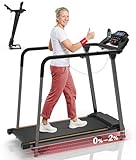 Redliro Treadmill for Seniors with Long Handrails Redliro | 14.8" x 39.3" | 5 mph | 300 lbs | View on Amazon | |
 UREVO SpaceWalk 5L Auto-Incline Walking Pad UREVO | 15.8" x 39.4" | 4 mph | 320 lbs | View on Amazon | |
 WalkingPad MX8 Vertical-Fold Treadmill WalkingPad | 15" x 39.4" | 5 mph | 330 lbs | View on Amazon | |
GoPlus 2-in-1 Folding Treadmill GoPlus | 16" x 40" | 7.5 mph | 265 lbs | View on Amazon | |
 UREVO SpaceWalk 3S Auto-Incline Walking Pad UREVO | 15" x 40.1" | 4 mph | 265 lbs | View on Amazon | |
 UREVO Strol 2E 2-in-1 Folding Treadmill UREVO | 15" x 40.2" | 6.2 mph | 265 lbs | View on Amazon | |
 Redliro Slow-Start Treadmill for Seniors (0.3 mph) Redliro | 15" x 41" | 5.5 mph | 300 lbs | View on Amazon | |
 UREVO CyberPad Auto-Incline Walking Pad UREVO | 16.5" x 42" | 4 mph | 242 lbs | View on Amazon | |
 DeerRun 4-in-1 Walking Pad DeerRun | 16.53" x 44.09" | 7.5 mph | 300 lbs | View on Amazon | |
 KingSmith WalkingPad P1 KingSmith | 15.75" x 47" | 3.7 mph | 220 lbs | View on Amazon | |
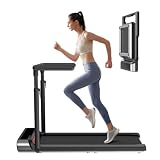 WalkingPad R3 Hybrid+ 2-in-1 Treadmill WalkingPad | 17" x 47" | 7.5 mph | 265 lbs | View on Amazon | |
 WalkingPad R2 Walk & Run 2-in-1 Folding Treadmill WalkingPad | 17" x 47" | 7.5 mph | 240 lbs | View on Amazon | |
WALKINGPAD Z1 WalkingPad | 17.3" x 47.2" | 3.7 mph | 242 lbs | View on Amazon | |
 WALKINGPAD C2 Folding Walking Pad WalkingPad | 15.75" x 47.2" | 3.73 mph | 220 lbs | View on Amazon | |
 WalkingPad X21 Double-Fold Treadmill WalkingPad | 18.1" x 47.6" | 7.5 mph | 220 lbs | View on Amazon | |
 WalkingPad Z1R Foldable Walking Pad with Handlebar WalkingPad | 15.7" x 47.6" | 5 mph | 242 lbs | View on Amazon | |
 WalkingPad Z3 Just Walk Foldable Walking Pad WalkingPad | 15.7" x 47.6" | 4 mph | 242 lbs | View on Amazon | |
 LifeSpan TX6-GlowUp Under Desk Treadmill LifeSpan | 20" x 48" | 6 mph | 400 lbs | View on Amazon | |
 WalkingPad MX10 Vertical-Fold Treadmill WalkingPad | 16.1" x 48" | 6.5 mph | 265 lbs | View on Amazon |
Weekly Japanese Walking Schedule for Walking Pad Users
Here is a sample week that balances Japanese walking sessions with steady desk walking:
| Day | Workout | Duration |
|---|---|---|
| Monday | Japanese Walking (4 intervals) | 30 min |
| Tuesday | Steady desk walking at 2.0 mph | 45-60 min |
| Wednesday | Japanese Walking (5 intervals) | 33 min |
| Thursday | Rest or light desk walking | — |
| Friday | Japanese Walking (4 intervals) | 30 min |
| Saturday | Outdoor walk (optional) | 30-45 min |
| Sunday | Rest | — |
Why a Walking Pad Beats Outdoor Walking for Japanese Intervals
While you can absolutely do Japanese walking outdoors, a walking pad has specific advantages for this interval method:
-
Precise speed control — You set exact speeds for your fast and slow intervals. No guessing whether you are walking briskly enough. When research says 3 minutes at a brisk pace, you hit that exactly.
-
Weather-proof consistency — The original Shinshu University protocol called for 3-4 sessions per week. A walking pad means rain, snow, or a 95-degree day will not derail your routine.
-
Easy tracking — Most walking pads display time, speed, distance, and calories. You can track your progress week over week without a fitness tracker.
-
Safe for beginners and seniors — The flat, predictable surface eliminates trip hazards. The original research included participants aged 44 to 78, and a walking pad makes the method even more accessible.
-
Fits any schedule — During slow recovery intervals, you can check your phone or sip water. The convenience of home use means you are more likely to stick with the 3-4 weekly sessions the research recommends.
How to Choose the Right Belt Size for Japanese Walking
Belt size matters more for Japanese walking than for steady-pace desk walking. During fast intervals, your stride lengthens and your gait widens slightly. A belt that feels fine at 2.0 mph may feel cramped at 3.5-4.0 mph.
Minimum recommendations for Japanese walking:
- Under 5 foot 8 inches: 40-inch length, 16-inch width
- 5 foot 8 inches to 6 foot 0 inches: 44-inch length, 16.5-inch width
- Over 6 foot 0 inches: 47-inch length, 17-inch width
Read the full belt size guide for detailed sizing by height and shoe size.
The Bottom Line
Japanese walking is backed by decades of clinical research from Shinshu University and is now the biggest fitness trend of 2026 for good reason. Doing it on a walking pad gives you precise speed control, weather independence, and the convenience of working out at home.
If you are already using a walking pad for steady walking, try adding Japanese walking intervals 3 times a week. The 30-minute commitment is modest, but the science says you will see significantly better results than walking at the same pace every day.
Ready to start? Pick up one of the top-rated walking pads for 2026, set your timer for 3-minute intervals, and give Japanese walking a try this week. If you need help choosing the right size, check the belt size guide first.